TOBI KAHN
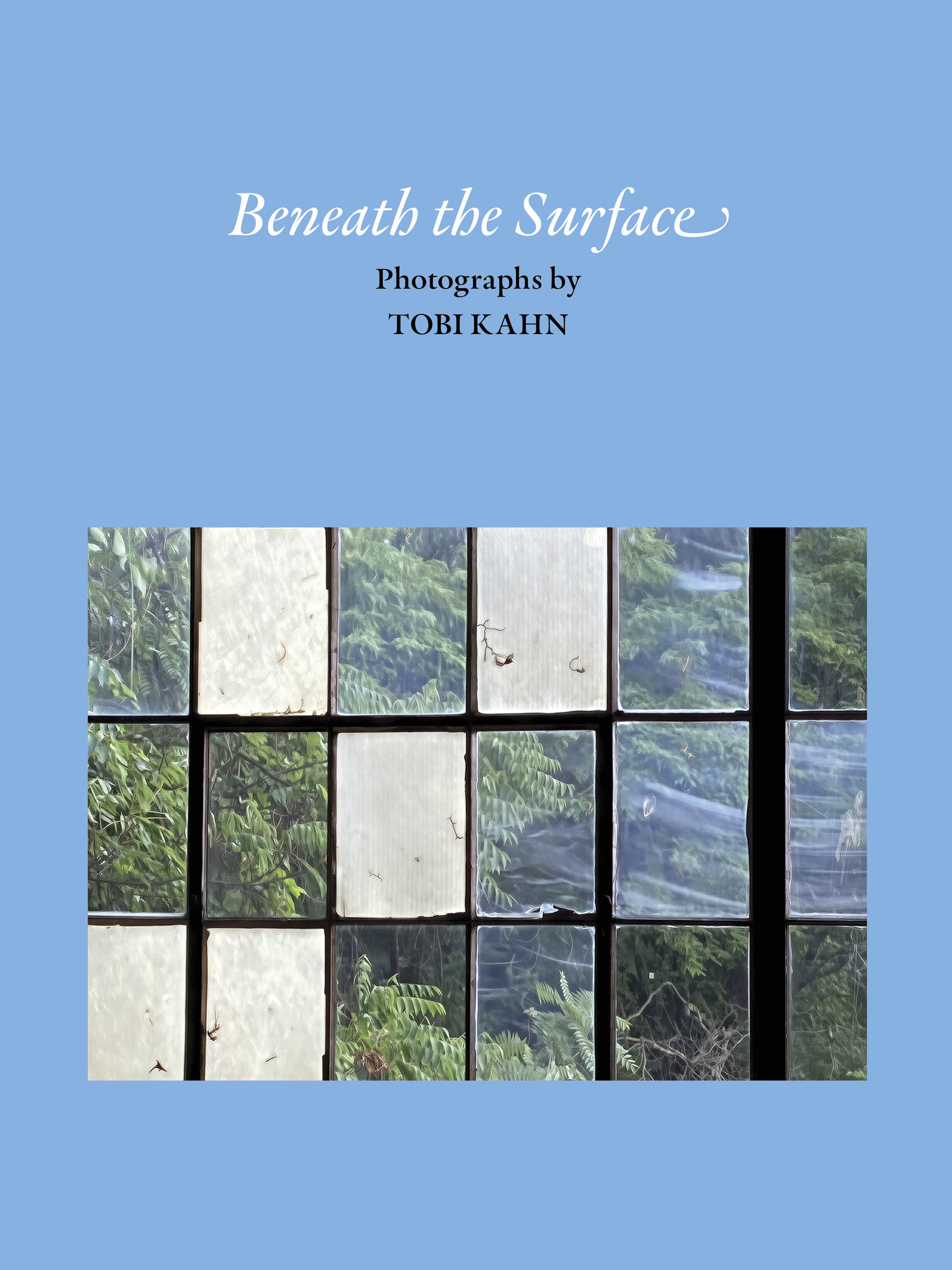
BENEATH THE SURFACE
Photographs by TOBI KAHN
With an Introduction by KLAUS OTTMANN
Hardcover, 174 pages, $45ISBN: 978-0-88214-241-8
Lesser known is that each of Kahn’s paintings and sculptures begins not as a sketch but with a photograph. As an undergraduate, Kahn studied photography with Roy DeCarava and Mark Feldstein at Hunter College before studying painting as a graduate student at Pratt Institute. Kahn has been taking photographs continuously since he was a child: “I was a photographer as a child—I always drew, but my primary way of thinking was through a camera.”
Tobi Kahn has always been an artist for whom seeing is a form of prolonged attention, and Beneath the Surface reveals photography not as an adjunct to his celebrated work as a painter, but as one of its essential foundations. Like Luigi Ghirri, Kahn possesses the rare ability to locate the metaphysical within the ordinary: a fragment of landscape, an unexpected geometry, the play of light across a surface become occasions for patient contemplation, transformed by Kahn’s remarkable formal intelligence into images of startling beauty and resonance … Kahn absorbs these photographic affinities into a visual language unmistakably his own, one in which the material world is at once earthly and metaphysical, and radical attentiveness and meditative observation become forms of ethical, even spiritual, engagement. These quiet, searching images allow us to see Kahn’s entire practice anew, revealing both the mastery of his photographic vision and the photographic eye that has been there all along.
Beneath the Surface completes our understanding of Tobi Kahn’s oeuvre by revealing that his photographs—at once standalone works and the foundation for those in other media—embody the same sensibility for the beauty of the natural world, the same interest in color and texture, and, perhaps most importantly, the same desire to capture the essence of things. It is this quest for the essence that unifies Kahn’s artistic practice; his photographs confirm it by providing the missing link.
Paul Gauguin once wrote in his diaries that his drawings were his secrets. How fortunate we are that in this intimate volume Tobi Kahn has allowed us to glimpse his own secrets, in the form of photographs. I've known Tobi and his work for many years and so in some images it was a delight, like playing a game of memory, to happen upon the source for a particularly iconic painting.
To see with the eyes of an artist should be a universal aspiration. Beneath the Surface invites the reader to do just that and thereby brings to life a world of active perception. Kahn’s visual acuity offers the chance to look anew and appreciate the poetic anecdotes that surround us and inspire his art.
In the gap between photography and painting the imagination soars. Seeing the photographic dimension of Tobi Kahn’s practice selectively sequenced over the course of 50 years is revelatory.