MARSIE SCHARLATT
Marsie Scharlatt worked as a book editor, and as a licensed psychotherapist in private practice and clinical settings for thirty-five years. In 1999, she became Director of the Hannah Wilke Collection and Archive, Los Angeles, where she works with art historians and curators on exhibitions and books. Scharlatt’s published writing includes “To a Songbird,” in Hannah Wilke: Intra-Venus (Ronald Feldman, 1994); “Hannah in California,” in Hannah Wilke: Selected Work, 1960–1992 (SolwayJones, 2004); “Return to Philadelphia,” in Hannah Wilke: Sculpture in the Landscape (Temple Contemporary, Tyler School of Art, Philadelphia, 2018); and “Healing Their Wounds,” in BOOBS in the Arts: Female Bodies in Pictorial History (DISTANZ Verlag, 2023). A Breathed Yes: Poems by Marsie Scharlatt, Art by Hannah Wilke was published by The March Press in 2017.
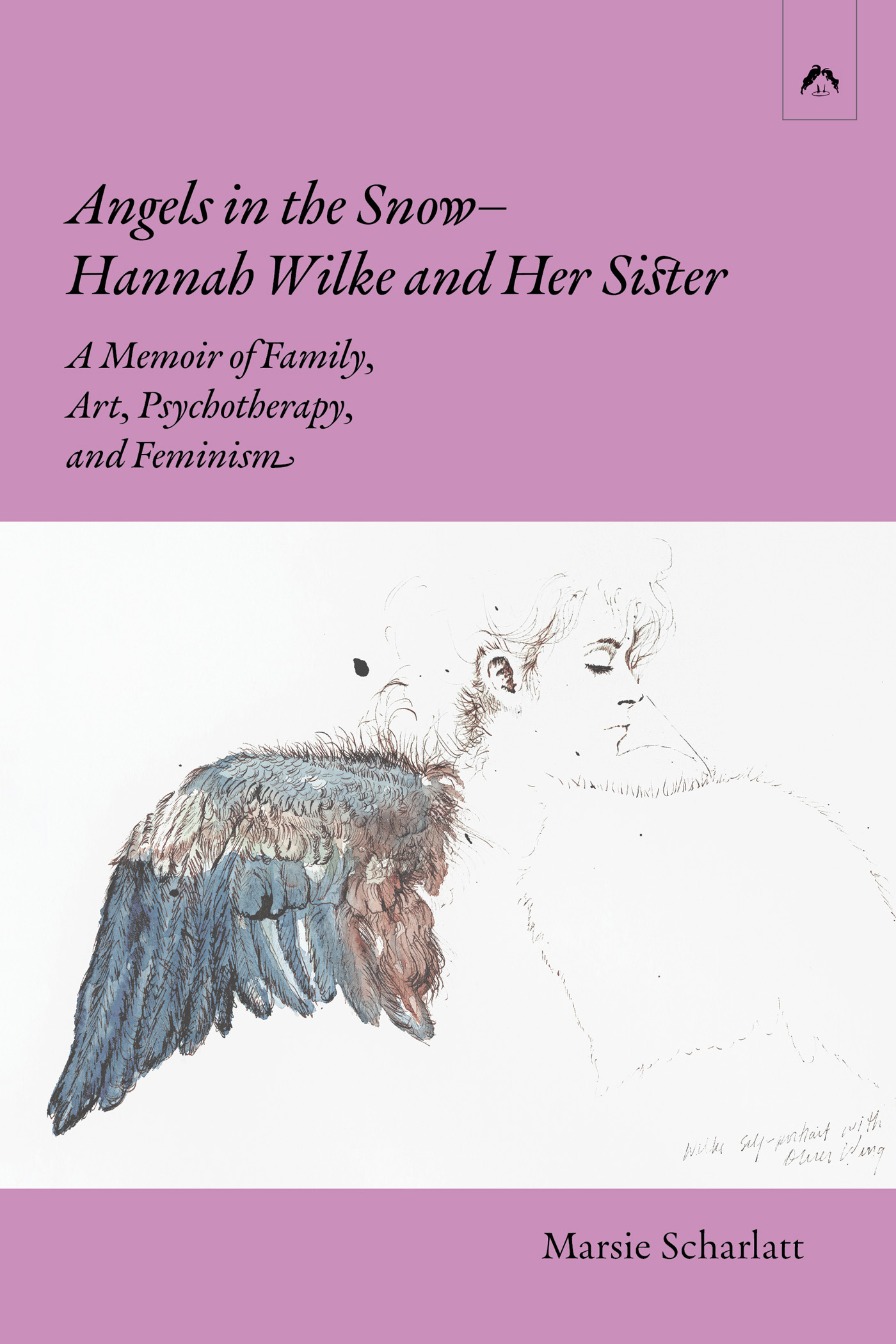
ANGELS IN THE SNOW—
HANNAH WILKE AND HER SISTER
A Memoir of Family, Art,
Psychotherapy, and Feminism
First edition 2026380 pages
with 103 color and b&w ills. Hardcover, $54
ISBN: 978-0-88214-903-5 Paperback, $32
ISBN: 978-0-88214-248-7
Throughout, Scharlatt frames their story through the lenses of their relationship, feminism, and the politics of memory, asking who gets to tell an artist’s story, how institutions treat the vulnerable and define mental health, and how the attempted erasure of women’s contributions and authorship occurred across both their lives. The memoir closes with reflections on synchronicity, loss, endurance and Wilke’s lasting significance as a foundational feminist pioneer whose art still influences the canon and artists everywhere.
Enriching any study of Hannah Wilke’s life and work, this book is itself a literary monument to the feminist struggle whose example and complexity is still deeply relevant today.